Ultimate Guide to Effective Home Workouts
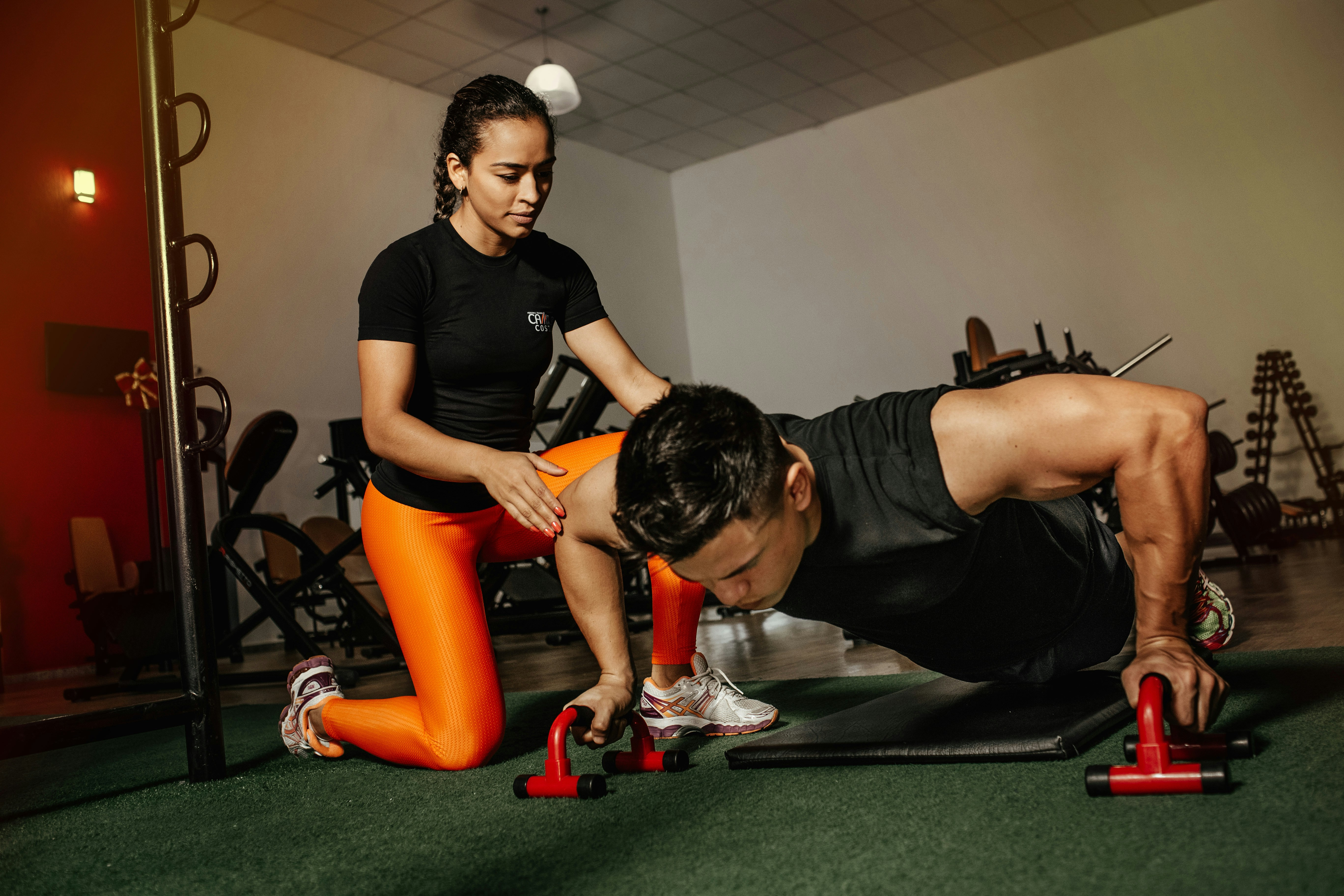
<p>Many individuals, facing the demands of family and career, find it challenging to consistently incorporate gym visits into their routines. The idea of commuting to a gym and spending a significant amount of time there can feel overwhelming when balancing multiple responsibilities. It's a common experience that life can become hectic, and dedicated gym time may not always be feasible. However, this does not necessitate neglecting personal fitness objectives.</p>
Redefining Your 'Home Gym'
When discussing a home workout, the VitalLife Editorial Team is not referring to the need for a fancy Bowflex setup or a Peloton bike taking up half a living room. An effective 'gym' can often consist of a yoga mat and a small corner of a bedroom. The beauty of a true home workout is its simplicity and accessibility. Specialized gear is not required; individuals can make incredible progress with just their own two hands and feet.
Consider this: many core strength exercises are powered entirely by one's own body. A 2017 study published in the Journal of Strength and Conditioning Research found that bodyweight exercises, when performed with proper intensity and consistency, can be just as effective as weight training for improving muscular strength and endurance in untrained individuals. That's powerful stuff, proving that no equipment isn't an excuse, it's an opportunity. The VitalLife Editorial Team encourages readers to forget the commercial gym and embrace their living room as a new fitness sanctuary.
The Unsung Hero: Bodyweight Training
A key appeal of bodyweight exercises is their capacity to teach efficient movement. These foundational movements—pushing, pulling, squatting, hinging, and rotating—translate directly into everyday life. They are not merely exercises but essential human functions. Mastering one's own bodyweight builds functional strength, which helps protect joints, improve balance, and ease daily tasks. This approach emphasizes exercises like push-ups to develop upper body and core strength, rather than solely focusing on dumbbell bicep curls.
Dr. John Rusin, a renowned performance coach, consistently emphasizes the importance of mastering fundamental movement patterns before adding external load. He suggests that building a strong foundation with bodyweight first significantly reduces injury risk when weights are introduced. This is particularly crucial for individuals beginning a fitness journey or returning after a break. Bodyweight training is considered safe, effective, and inherently adaptable—qualities that contribute to a successful home workout.
Crafting Your No-Equipment Routine
So, an individual is ready to dive in? Great! Building an effective no equipment routine isn't complicated. It is common to structure workouts with a warm-up, a main strength segment, and a cool-down. For the main segment, focus on hitting all major muscle groups.
- Lower Body: Squats (goblet squat with a heavy book, pistol squat progression), Lunges (forward, reverse, lateral), Glute Bridges.
- Upper Body (Push): Push-ups (on knees, elevated, incline, decline), Dips (using a sturdy chair or couch).
- Upper Body (Pull): Inverted Rows (under a sturdy table or using resistance bands), Wall pulls (an isometric exercise against a wall to engage back muscles).
- Core: Planks (straight arm, forearm, side), Crunches, Leg Raises, Bird-Dog.
Aim for 3-4 sets of 10-15 repetitions for strength, or 20-30 seconds for isometric holds. The key is consistency and progressive overload, which will be discussed next. One should not underestimate the challenge of a truly focused home workout; it can be incredibly demanding!
Making It Harder: Progressive Overload without Weights
The question often arises: 'How can one make a bodyweight workout challenging once strength increases?' This is where progressive overload becomes key, and it's entirely achievable without needing external weights. The approach involves increasing the demand on muscles through strategic methods.
- Increase Reps/Sets: Begin with 3 sets of 10 push-ups, then gradually advance to 4 sets of 15.
- Decrease Rest Time: Reduce the rest period between sets from 90 seconds to 60 seconds, then to 30.
- Improve Form/Tempo: Slow down repetitions. A controlled 3-second descent on a squat, followed by a 1-second pause at the bottom, presents a greater challenge than a rapid up-and-down movement.
- Increase Range of Motion: For push-ups, try to achieve a deeper range by elevating the hands.
- Add Explosiveness: Consider exercises such as jump squats or plyometric push-ups (ensuring joint safety).
- Unilateral Movements: Lunges offer a greater challenge for a single leg compared to squats. Single-leg glute bridges or pistol squats are effective for engaging one side at a time.
By adjusting these variables, individuals can consistently challenge their muscles and observe significant progress, even with a strict no equipment setup at home.
Smart Ways to Use Household Items
While the power of pure bodyweight is often emphasized, individuals are also encouraged to get creative with readily available items. Many are surprised by what qualifies as useful 'equipment' in a pinch.
- Sturdy Chair/Sofa: Perfect for triceps dips, elevated push-ups, step-ups, or Bulgarian split squats. It is important to ensure its stability.
- Water Bottles/Books: These can add a little extra resistance for squats, lunges, or overhead presses if additional tension is desired. A gallon of water is approximately 8 pounds, which can be significant.
- Backpack with Books: Loading a backpack can provide weight for squats, lunges, or push-ups. Some individuals have reported using upwards of 40 lbs of textbooks for exercises like RDLs (Romanian Deadlifts).
- Towels: A towel can be utilized for slider exercises (on smooth floors) or for isometric holds to create resistance (e.g., pulling a towel apart).
- Staircase: Effective for cardio intervals, calf raises, or elevated push-ups.
The key is to not limit one's imagination. A quick scan of a living space can reveal several effective training tools for a home workout.
Nutrition and Recovery: The Home Warrior's Edge
One can do all the perfect push-ups and squats in the world, but without proper fuel and rest, progress will stall. This is observed frequently with enthusiastic beginners. Home workout efforts can be wasted if one is not eating enough protein to repair muscle fibers or getting sufficient sleep for recovery and hormonal balance. The body can be thought of like a high-performance car; one wouldn't put diesel in a petrol engine, would they?
Focus on whole, unprocessed foods. Prioritize lean protein sources like chicken, fish, eggs, and legumes. Include plenty of colorful vegetables and fruits for micronutrients, and healthy fats from avocados, nuts, and olive oil. Aim for 7-9 hours of quality sleep every night. These aren't just suggestions; they are non-negotiable pillars of any successful fitness regimen, whether one is working out in a gym or just doing a quick no equipment circuit in their bedroom. This holistic approach is what truly drives results.
Consistency: Your Most Powerful Tool
Ultimately, the most expensive gym membership, the fanciest equipment, or the most intricate home workout plan means nothing without consistency. Evidence suggests that individuals who see the biggest transformations aren't necessarily the ones with the most intense workouts, but the ones who show up, day after day, week after week. Even a 20-minute bodyweight circuit done 4-5 times a week will yield far greater results than an hour-long, super-intense session once every two weeks.
Finding a schedule that works and sticking to it is key. Perhaps it's 6 AM before the kids wake up, or 9 PM after everyone’s asleep. Setting an alarm, laying out workout clothes, or even starting with just 5 minutes can be effective. Often, those 5 minutes turn into 30. A living room is ready, bodyweight can be an effective tool, and there are absolutely no equipment excuses left. Now, it's time to get after it!
Key takeaways
- Your home is a perfectly capable gym; you don't need fancy equipment to get a great workout.
- Bodyweight exercises are incredibly effective for building functional strength and muscle endurance.
- Progressive overload can be achieved without weights by manipulating reps, sets, tempo, and exercise variations.
- Get creative! Household items like chairs, backpacks, and towels can enhance your home workouts.
- Nutrition and adequate sleep are just as critical as your workouts for achieving fitness goals.
- Consistency trumps intensity; regular, shorter sessions are more effective than infrequent, long ones.
This article reflects the personal experience and professional opinion of the author and is provided for educational purposes. It is not a substitute for medical advice. Always consult a qualified clinician before making changes to your nutrition, training, or sleep.
Related Articles
Building Muscle After 40
Effective strategies to build and maintain muscle mass.
HIIT vs Steady State Cardio
Compare different cardio approaches for your goals.
Strength Training for Beginners
Complete guide to building your first routine.